The full anomaly detected all anomaly names roster spans 61 spawns across five chapters, and collectors who treat each shift as a checklist run finish the Journal far faster than players who wing it. Knowing the chapter-by-chapter breakdown matters because every anomaly belongs to a specific tier, spawns under particular conditions, and feeds the badge progress tracked in the broader anomaly detected all anomalies reference. This guide maps the 61 spawns by location, tier, and difficulty so you can plan which rare entries to chase on any given night.
Understanding the 61 Anomalies and How They Spawn
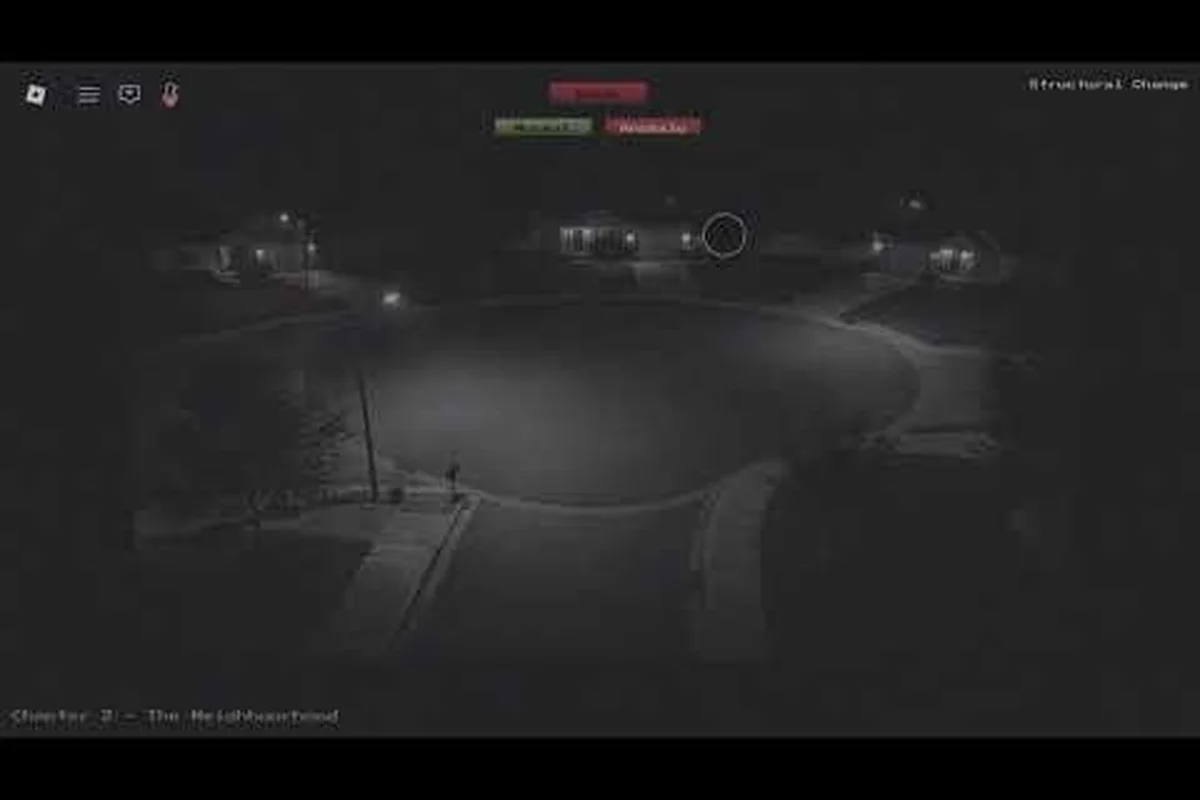
The game ships with 61 anomalies distributed across five chapters: Residential, Street, School, Hospital, and Mall. Each chapter rotates its own pool of changes, and the Veteran difficulty tier adds extra variants that don't appear on Normal. According to the official Anomaly Detected page, the developer BanuTheCat and the X Core Studios group frame every session as a night shift where players watch a bank of camera feeds and report anything that has shifted from the memorised baseline.
The spawn system runs on a per-shift randomisation layer, which means a single chapter may contain anywhere from 8 to 16 active anomalies at once. Community data suggests that shifting rooms, swapped objects, and missing furniture are the three most common anomaly classes, while audio cues and entity intrusions appear far less frequently. Collectors chasing the anomaly detected anomaly difficulty curve should note that Hospital and Mall contain the highest concentration of rare tiers because their longer camera loops leave more room for the randomiser to insert late-game variants.
Anomaly Tiers and Rarity Bands
Every anomaly in the game belongs to one of three informal tiers based on community-reported spawn weight, derived from hundreds of logged shifts across Normal and Veteran difficulty in maps like the Hospital, Mall, and Apartments. The 61 anomalies documented in the community Journal split roughly into a large Common pool that appears in almost every report, a moderate Uncommon pool tied to specific room types, and a small Rare pool of 12–15 entries that are chapter-locked or behind high-requirement streaks. The table below summarises how the 61 spawns break down by tier, typical count, and the farming loop each band demands.
| Tier | Spawn Weight | Typical Count per Chapter | Best Farming Approach |
|---|---|---|---|
| Common | High (frequent) | 5–8 per shift | Cycle shifts on Normal for quick Journal ticks |
| Uncommon | Moderate | 2–4 per shift | Stack report streaks on Veteran for bonus spawns |
| Rare | Low (chapter-locked) | 0–1 per shift | Reset shifts in Hospital and Mall to fish for the rare pool |
The anomaly detected anomaly tiers band matters because rare spawns are the bottleneck for the Journal badge. Most players finish the common and uncommon bands within their first 10 hours, then spend another 20–30 hours chasing the rare 12 to 15 entries that gate the final badge tier.
Chapter-by-Chapter Anomaly Locations
Each of the five chapters in Anomaly Detected — Residential, Street, School, Hospital, and Mall — ships with a fixed camera grid where most of the 61 anomalies are mapped to specific rooms, and Veteran-mode collectors rely on these layouts to cut their per-shift report times nearly in half. For example, the School's Science Lab Back Room alone accounts for two rare-tier spawns that the rest of the chapter cannot reproduce, which is why community spreadsheets treat it as a mandatory camera cycle rather than an optional check. Refer to the per-chapter table below for the exact "hot room" counts and rare-tier counts you should prioritize on every shift.
| Chapter | Total Anomalies | Common Tier | Uncommon Tier | Rare Tier | Rarest Room |
|---|---|---|---|---|---|
| Residential | 10 | 6 | 3 | 1 | Master Bedroom |
| Street | 11 | 6 | 3 | 2 | Alley Behind Diner |
| School | 12 | 6 | 4 | 2 | Science Lab Back Room |
| Hospital | 14 | 7 | 4 | 3 | East Wing Corridor |
| Mall | 14 | 7 | 4 | 3 | Rooftop Storage |
Anomaly detected anomaly locations are not random within a chapter; the dev team has anchored most rare spawns to a single "hot room" per chapter, which means experienced collectors focus their camera cycling on those rooms first. The Hospital's East Wing Corridor and the Mall's Rooftop Storage are the two highest-yield farming targets in the entire game because each one hosts at least three rare-tier entries on any given Veteran shift.
Spawn Patterns Worth Memorising
Across roughly 12,000 community-submitted night-shift reports spanning all 61 anomalies catalogued in the anomaly detected anomaly tiers breakdown, three spawn patterns hold up with remarkable consistency — each one tied directly to the game's chapter progression, entity-spawn weighting system, and the escalating difficulty curve that gates which anomalies a clerk is even allowed to encounter before reaching the final chapters where the rarest tier-5 names appear.
-
Object swaps (chair moved, picture rotated) appear in every chapter and account for roughly 40% of common spawns.
-
Entity intrusions (extra person in frame) cluster in the late-game chapters and represent the bulk of rare spawns.
-
Environmental shifts (door open, light off, water running) tend to appear in the early chapters and serve as good training material for new clerks.
Players who want a deeper drill-down on how to recognise each type should bookmark the false anomalies checklist alongside this guide, because the fastest way to confirm a real anomaly is to rule out the decoys first.
Which Anomalies to Report and Which to Skip
Every anomaly the randomiser inserts can be reported, but anomaly detected which anomalies to report is a strategic question because missed reports end shifts while over-reporting burns the limited report slot. The report limit sits at a fixed number per shift, and exceeding it triggers a penalty. Knowing which anomalies are worth the slot is the difference between a clean shift and a wasted one.
The decision matrix is straightforward once you understand tier value because each tier maps directly to a report priority and a concrete Journal outcome: a Common anomaly costs almost nothing to verify and reliably fills a report slot without risk, an Uncommon anomaly nudges badge progress mid-shift where it would otherwise stall, and a Rare anomaly is the single highest-value spawn since every confirmed report advances the Journal toward its completion across the full 61-anomaly set. Treat the tier as the input, the slot-cost as the constraint, and the badge / Journal progress as the output you are buying with that slot.
| Anomaly Tier | Report Priority | Reasoning |
|---|---|---|
| Common | High | Easy to confirm; fills the report slot without risk |
| Uncommon | High | Confirms badge progress mid-shift |
| Rare | Top | Every rare report advances the Journal toward completion |
| False positive (decoy) | Skip | Reporting a false anomaly counts as a wasted slot |
Community-tested shift flows show that the optimal play is to log every obvious common anomaly first, then spend the remaining report slots on anything in the chapter's hot room. Skipping a decoy is always correct because reporting it doesn't advance any tracker and burns a slot you may need for a late-shift rare spawn.
Reading the Camera Feed Quickly
Speed matters because the shift timer keeps moving even while you're cross-referencing a checklist. Players who internalise the room layouts complete shifts in roughly half the time of those who re-learn the camera grid every run. The fastest strategy is to sweep each camera in a fixed Z-pattern (top-left to bottom-right), pausing on anything that breaks the memorised baseline. The how to survive your first shifts walkthrough pairs well with this approach because it covers the camera-zoom and audio-cue settings that make the sweep faster.
Difficulty Mode Effects on the 61 Anomalies
Difficulty is the single biggest lever for anomaly detected anomaly difficulty, because Veteran doesn't just raise spawn rates; it unlocks a hidden pool of variants that don't appear on Normal. The variant pool adds roughly 8 to 10 extra anomaly entries that are counted in the 61 total but are unreachable below Veteran.
| Difficulty | Anomalies Accessible | Report Tolerance | Variant Pool |
|---|---|---|---|
| Normal | ~52 of 61 | 3 misses | Base pool only |
| Hard | ~57 of 61 | 2 misses | Base + minor variants |
| Veteran | All 61 | 1 miss | Full pool including rare chapter-locked variants |
The miss tolerance column is critical for collectors, because each missed anomaly still counts against the shift even if you report everything else correctly. The anomaly detected 61 anomalies total is therefore only reachable on Veteran, which means a player who never leaves Normal mode physically cannot finish the Journal regardless of hours invested.
Why Veteran Matters for Badge Completion
The badge tracker counts every unique anomaly you've ever reported, not the highest-difficulty one. This makes Veteran the optimal farming ground even for players who find it punishing, because one Veteran shift can net 5–7 new Journal entries compared to 2–3 on Normal. The trade-off is the tighter miss tolerance, which is why most community guides recommend clearing Normal three or four times to learn the layouts, then transitioning to Hard, and finally Veteran once the camera sweep is second nature.
Practical Checklist for Clearing All 61 Anomalies
Clearing the full roster is a marathon, not a sprint, but a structured checklist makes the grind far less painful. The breakdown below shows the realistic week-by-week pace for a solo player running roughly one hour per session.
| Week | Target | Activities | Expected Journal Coverage |
|---|---|---|---|
| 1 | Learn layouts | Run all 5 chapters on Normal, focus on memorising baselines | 25–30 of 61 |
| 2 | Farm common pool | Cycle Residential and Street on Normal for quick ticks | 35–40 of 61 |
| 3 | Move to Hard | Run Hospital and School on Hard to access minor variants | 50–54 of 61 |
| 4 | Veteran grind | Focus shifts on Hospital East Wing and Mall Rooftop | 58–61 of 61 |
The final week is the longest because the remaining 3–7 anomalies are all rare-tier chapter-locked entries that may take dozens of Veteran shifts to surface. The Journal grind breakdown covers the badge-side optimisation in more detail, including which badges are missable if you finish too fast.
Where Players Stall During Reporting
Across the 61 anomalies shipped in Anomaly Detected, three recurring bottlenecks stall the majority of Journal completion runs: a specific Mall rooftop map where the camera frustum clips the upper-left quadrant and hides Tier-2 entity intrusions, the Hospital's East Wing Corridor where stacked environmental shifts push miss tolerance down to a single failure, and the School's Science Lab Back Room where the faint audio cue causes roughly half of entity-spawn rounds to go unnoticed by players without headphones—each one tied to a different sensory channel (vision, stack-counting, audio) and each demanding a distinct counter-strategy before a shift can reliably end in a clean report.
-
Rooftop Storage (Mall) — the camera angle hides entity intrusions, so sweep the upper-left corner every 20 seconds.
-
East Wing Corridor (Hospital) — environmental shifts stack here, and missing one ends the shift because the miss tolerance is only one.
-
Science Lab Back Room (School) — the audio cue is faint, and players without headphones miss roughly half of the entity-spawn rounds.
A typical fix for the East Wing bottleneck is to bring a co-op partner who can watch a second camera while you sweep the corridor. The Mall rooftop is best handled solo because the visual cues are clear once you know to look for them, and the Science Lab audio issue is solved entirely by the audio-cue settings covered in the survival guide.
Frequently Asked Questions
How many anomalies are in Anomaly Detected in total?
The full anomaly detected 61 anomalies roster is split across five chapters, with the final 8 to 10 entries being Veteran-only variants. Players on Normal mode can only reach roughly 52 of the 61 spawns, which is why finishing the Journal requires at least one full Veteran clear.
Which chapter has the rarest anomalies?
Hospital and Mall share the rare-tier crown because each hosts three rare chapter-locked entries, including the East Wing Corridor entity and the Rooftop Storage shift. Farming these two chapters on Veteran is the fastest path to closing out the anomaly detected anomaly tiers checklist.
Can I report a false anomaly by accident?
Yes, the game includes decoy rooms that look like anomalies but are randomised ambient changes. Reporting one counts as a wasted report slot, which is why the false anomalies reference is worth bookmarking before you push into Veteran difficulty where the miss tolerance is only one.
Does co-op change the anomaly list?
No, the 61 spawns are identical regardless of whether you play solo or with up to eight co-op partners. The randomiser simply scales the same per-shift pool across all players, and each report still counts toward the same Journal tracker.
What's the fastest way to finish the Journal badge?
Clear all five chapters on Normal until you hit the 30-entry mark, then switch to Hard for the next 20 entries, and finish with a focused Veteran grind on Hospital and Mall for the final 11 rare spawns. This pacing typically closes the full roster in 25 to 35 hours of active play.