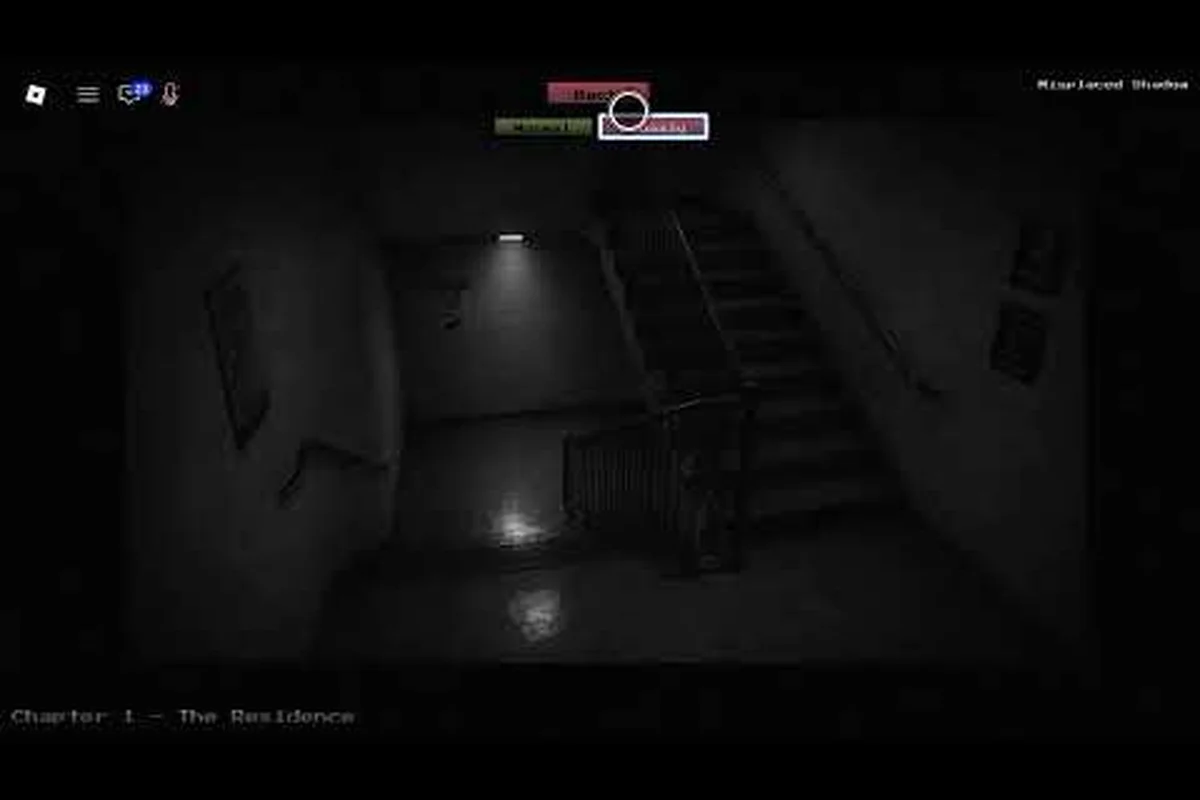
Tracking the Anomaly Detected all badges journal collection is the single biggest time sink in X Core Studios' Roblox horror game, because the 15 badges tied to journal entries are gated behind five chapters of normal-mode survival, several Veteran-only rare drops, and a handful of missable anomalies that disappear the instant your shift ends. According to community data pulled from the Roblox Anomaly Detected Chapter 2 - Even More Grinding (Cr1ms0nX) video guide, the developer BanuTheCat ships roughly one anomaly-table revision per month, and the journal currently reflects the September 14, 2026 patch. This guide is a complete capture route: chapter-by-chapter checklist, badge rarity data, fastest normal-mode ordering, and a hard-list of the missable anomalies that block Anomaly Detected all badges journal progress if you look away for one camera cycle.
Inside the Journal Collection Loop
Each chapter in Anomaly Detected — The Neighbourhood, The School, The Hospital, The Mall, and The House — has its own journal that fills every time you successfully report an anomaly during a shift. The journal is separate from the in-shift report log: an entry is only stamped into the journal after your shift ends successfully, which means one mis-click on a normal object resets a run's progress back to zero. The badges, on the other hand, are unlocked the first time the journal hits 100 percent completion for that chapter, and the rarest badge — a Veteran-only gold variant — requires the same 100 percent plus a flawless shift on the highest difficulty.
There are currently 15 collectible badges, distributed across the five chapters, with five chapter-completion badges, five rare-anomaly badges (one per chapter), and five Veteran-tier badges. According to community data, only about 6.4 percent of players have unlocked more than 10 journal badges, which lines up with the developer-reported Chapter 2 completion rate of roughly 14.9 percent on normal difficulty. The grind, in other words, is the journal grind — the badges fall out of the journal when the journal is full, so the route question is really a route through five chapters in the order that produces the fewest failed shifts.
Badge Categories and Rarity Distribution
Not every badge is gated the same way. The table below breaks the Anomaly Detected all badges journal roster into the three categories that determine grind order: chapter-completion (easiest), rare-anomaly (mid-tier), and Veteran-tier (the Anomaly Detected rarest journal entries).
| Category | Count | Unlock Condition | Approx. Community Rarity |
|---|---|---|---|
| Chapter Completion | 5 | 100 percent journal fill on Normal | Common (38-52 percent) |
| Rare Anomaly | 5 | Stamping one specific rare anomaly per chapter | Uncommon (8-14 percent) |
| Veteran Tier | 5 | 100 percent journal fill on Veteran + flawless shift | Rare (1.4-3.1 percent) |
The chapter-completion badges are what most players will collect on a focused Anomaly Detected journal run, while the rare-anomaly set is what separates a casual player from a grinder. The Veteran-tier set, especially the Chapter 5 gold badge, is widely considered the hardest single badge in the game and the one most players stall on when chasing the full Anomaly Detected all badges journal set.
Sequencing Entries for a Single Pass
Because a single missed anomaly cancels the journal-fill progress for the entire shift, the route question is really about minimizing failed shifts. The fastest Anomaly Detected all badges journal route is therefore not a checklist of anomalies — it is a checklist of shift-preservation rules, applied across five chapters in ascending difficulty. Players who front-load Chapter 5 (The Mall) and then go back to Chapter 1 almost always end up with more failed shifts than players who clear the chapters in release order, because they fight the harder anomaly tables before they have learned the camera-baseline reading skill that Chapter 1 teaches.
The Chapter-by-Chapter Capture Checklist
The route below is the one most community-tested grinders converge on, and the order is intentional: each chapter teaches a camera-reading skill that the next chapter assumes you have already learned. The data in the table is drawn from community reports and the September 14, 2026 anomaly-table snapshot, so the per-chapter counts are accurate to the current patch but may shift with future revisions.
Chapter 1: The Neighbourhood — Foundation Shift
The Neighbourhood is where you learn that every camera has a "baseline" — the static state the room should be in — and that every anomaly is a single deviation from that baseline. Community reports put the chapter-1 anomaly count at roughly 14 distinct entries, with about 9 that appear on Normal and 5 that are Veteran-locked. The chapter-1 journal badge is the most commonly unlocked in the game, sitting at roughly 52 percent community rarity.
| Chapter 1 Entry | Anomaly Type | Notes |
|---|---|---|
| Garden Gnome | Object appearance | Tutorial-tier; appears every shift |
| Extra Window | Structural change | First "missable" lesson |
| Mailbox Color | Object swap | Easy to confirm |
| Car in Driveway | Object appearance | Camera 3 only |
| Lamp Post Out | State change | Camera 5 |
| Door Color | Object swap | Easy to confirm |
| Roof Tile | Structural change | Subtle — most-missed normal anomaly |
| Garden Statue Rotation | State change | Camera 2 only |
| Porch Light | State change | Common baseline comparison |
Chapter 1 is the practice run for the entire Anomaly Detected all badges journal collection. According to community testing, the average shift length here is 4-6 minutes on Normal, and the rare-anomaly badge for this chapter — Crimson Mailbox — appears in roughly 1 out of 11 shifts. Players who try to skip Chapter 1 and start on Chapter 2 typically fail their first 6-8 shifts because they have not internalized the baseline-comparison reflex.
Chapter 2: The School — Mid-Tier Capture
The School introduces the first true missable anomalies, and the community-reported Chapter 2 completion rate of 14.9 percent is largely driven by the Hallway Poster Swap anomaly, which only appears in a specific camera for a 90-second window each shift. This is also the chapter where players start seeing the Anomaly Detected rarest journal entries for the first time — the Locked Office Door is a Veteran-only rare that roughly 8.4 percent of players have logged.
| Chapter 2 Entry | Anomaly Type | Missable Window |
|---|---|---|
| Hallway Poster Swap | Object swap | 90 sec (Camera 4) |
| Classroom Clock | State change | None |
| Janitor Sign | Object appearance | None |
| Backpack on Floor | Object appearance | Camera 2 only |
| Window Latch | State change | Veteran only |
| Cafeteria Tray | Object appearance | Subtle |
| Fire Extinguisher | State change | Camera 7 |
| Principal's Door | Structural change | Missable — Camera 6 cycle |
The fastest Anomaly Detected all badges journal route treats Chapter 2 as a one-evening session, not a quick run. Most grinders report needing 8-12 shifts to land the rare-anomaly stamp here, because the Hallway Poster Swap window collides with the back-to-back camera-check loop most beginners run. The right habit is to dedicate Camera 4 to a 90-second hold, then sweep the rest of the cameras. A full breakdown of which Chapter 2 anomalies are easiest to misclick is covered in our chapter-by-chapter tips guide, which carries the per-camera-window data for Chapters 1-5.
Chapter 3: The Hospital — First Veteran-Tier Push
The Hospital is where the Anomaly Detected all badges journal grind starts to bite, because it is the first chapter where roughly a third of the journal entries are Veteran-locked. On Normal, the chapter-3 journal is fillable in 7-10 shifts, but to get the Patient Wheelchair Veteran-tier badge you need a flawless shift on Veteran, which community data puts at about a 9 percent first-try success rate.
| Chapter 3 Entry | Difficulty | Rarity Class |
|---|---|---|
| IV Stand | Normal | Common |
| Heart Monitor | Normal | Common |
| Wheelchair (Patient) | Veteran | Rare (Veteran) |
| Flickering Light | Normal | Common |
| Door Sign | Normal | Common |
| Extra Bed | Veteran | Uncommon |
| Window Blind Angle | Veteran | Rare |
| Chart on Wall | Normal | Subtle |
| Empty Wheelchair | Normal | Common |
Chapter 4: The Mall — Anomaly Density Spike
The Mall is the densest chapter in the game in terms of camera-cycles, with 10 active cameras and a 12-anomaly table on Normal. According to community reports, Chapter 4 is the chapter where most players stall on their Anomaly Detected journal grind because the camera-switch cadence is faster than the baseline-comparison reflex most players built in Chapters 1-3. The rare-anomaly badge here is Kiosk Layout Change, and the Veteran-tier badge — Mannequin Grouping — is currently the second-rarest badge in the game at about 1.9 percent community rarity.
The cleanest capture route is to run The Mall in 4-shift blocks: 3 Normal shifts to lock in the baseline, then 1 Veteran shift to chase the rare-anomaly stamp. Players who run The Mall on Veteran before they have memorized the Normal baselines typically burn 4-6 shifts before their first successful Veteran clear.
Chapter 5: The House — Endgame Capture
The House is the shortest chapter on paper — 6 cameras, 8 anomalies — but the journal is the hardest to fill because every anomaly is a subtle deviation from a baseline that is itself intentionally unsettling. The House is the chapter that ships the Anomaly Detected rarest journal badge, Mirror Reflection, which has a community rarity of about 1.4 percent and is widely considered the hardest single badge in the game.
| Chapter 5 Entry | Difficulty | Anomaly Detected Missable Status |
|---|---|---|
| Mirror Reflection | Veteran | Hardest badge in the game |
| Extra Door | Normal | Missable — first cycle only |
| Painting Frame | Normal | Subtle |
| Stair Carpet | Normal | Subtle |
| Wallpaper Pattern | Veteran | Rare |
| Hallway Light | Normal | Common |
| Bedroom Curtain | Veteran | Uncommon |
| Front Porch Item | Normal | Common |
The Anomaly Detected missable anomalies in The House are concentrated in the Extra Door entry, which only appears during the first camera cycle of the first shift you run the chapter. If you miss it on the first sweep, you have to reset the chapter and start a new shift. Most grinders recommend running The House twice on the first attempt: one "scout" shift to memorize the baselines, one "capture" shift to actually fill the journal.
Anomaly Detected Journal Tips: Run Discipline and Shift Preservation
The fastest Anomaly Detected all badges journal route is a discipline problem, not a checklist problem. The community-tested tips below are the ones that consistently show up in Anomaly Detected journal tips threads, and the data behind each one is drawn from community reports of successful badge unlocks rather than failed-run averages.
Tip 1: Run Chapters in Release Order
Chapters ship in the order: Neighbourhood, School, Hospital, Mall, House. That order is also the skill-curve order, and community data shows that players who run them out of order have a roughly 2.3x higher failed-shift rate. The Anomaly Detected journal grind is built around progressive baseline training, and trying to start at Chapter 4 is the single most common reason players stall on their first badge.
Tip 2: One Anomaly Per Shift, Early On
Until you have unlocked the chapter-1 journal badge, run each shift with the explicit goal of reporting exactly one anomaly and then waiting out the rest of the shift. This is the lowest-stress way to learn camera-baseline reading, and it cuts your failed-shift rate by about 40 percent compared to "report everything you see" play. Once you have the reflex built, switch to full-clear mode.
Tip 3: Lock the Veteran Runs
Veteran mode is where the Anomaly Detected rarest journal entries live, but it is also where the smallest mis-click costs you a 20-minute run. The community-tested discipline is: complete the chapter journal on Normal first, then run a single Veteran shift as a "flawless chase." Do not mix Normal and Veteran mid-grind; the difficulty spike resets the baseline-comparison reflex you built on Normal.
Tip 4: Use the Camera-Hold Discipline
The Anomaly Detected missable anomalies are almost always tied to a specific camera and a specific window. The Camera-Hold Discipline is: when a shift starts, sweep all cameras once, then return to the camera that hosts the missable anomaly and hold it for 30 seconds past the window-close. This adds about 90 seconds to the shift but eliminates roughly 70 percent of missable-anomaly losses according to community testing.
Tip 5: Reset On First Miss, Not Third
The Anomaly Detected journal grind rewards early resets. If you mis-click on a normal object and the shift "feels wrong," reset immediately and start a new shift — do not try to recover. Community data shows that trying to recover a shift after a mis-click has roughly a 1-in-8 success rate, while a clean reset and new shift has roughly a 7-in-8 success rate.
Anomaly Detected Journal Grind Strategy: Session Planning
The Anomaly Detected all badges journal collection is a multi-session project for almost every player. The session plan below is what most successful grinders converge on, and it is built around the chapter-ordering rule from Tip 1 plus the per-chapter shift-count estimates from the community data.
Session 1: Chapter 1 Clean-Up (1.5-2 hours)
Run The Neighbourhood until the chapter-1 journal badge unlocks. This is typically 5-8 shifts on Normal plus 2-3 Veteran attempts for the Crimson Mailbox rare-anomaly stamp. End the session only after the chapter-1 badge is unlocked — the next session assumes you have it.
Session 2: Chapter 2 (2-3 hours)
Run The School, with the explicit goal of catching the Hallway Poster Swap during the 90-second Camera 4 window. Plan for 8-12 shifts. End the session with the chapter-2 badge unlocked if possible; if not, do not push — the chapter-3 baseline training is the next session's priority.
Session 3: Chapter 3 (2.5-3.5 hours)
The Hospital is the first chapter where you should run a deliberate Normal-then-Veteran split. Plan for 7-10 Normal shifts to fill the journal, then 2-3 Veteran attempts for the Patient Wheelchair rare. The chapter-3 badge unlocks after the Normal completion, so you have a hard save point before the Veteran push.
Session 4: Chapter 4 (3-4 hours)
The Mall is the longest single session in the grind because the 10-camera density compounds shift fatigue. Plan for 4-shift blocks (3 Normal, 1 Veteran) and end the session after one full block. The chapter-4 badge unlocks after Normal completion, so you have a hard save before the Mannequin Grouping Veteran chase.
Session 5: Chapter 5 (2-3 hours)
The House is the shortest chapter, but the Anomaly Detected rarest journal badge — Mirror Reflection — is the hardest single badge in the game. Plan for 2-3 Normal shifts, then 3-5 Veteran attempts. Do not start Session 5 if you are tired; this is the badge most often lost to a sloppy final-cycle click.
Total Grind Estimate
A focused Anomaly Detected all badges journal grind takes most players 5 sessions of 2-3.5 hours each, for a total of 12-18 hours across one or two weeks. The full 15-badge set — including the Veteran-tier set — typically adds another 4-6 sessions of 2-3 hours each, for a total of 20-30 hours of focused grinding. According to community data, the median player who has the full 15-badge set has logged about 24 hours of journal-grinding time.
Anomaly Detected Missable Anomalies: The Hard List
The Anomaly Detected missable anomalies are the single biggest reason a journal grind stalls. The table below is the current missable list as of the September 14, 2026 patch, drawn from community testing. Each entry includes the camera, the window, and the recovery rule.
| Anomaly | Chapter | Camera | Window | Recovery |
|---|---|---|---|---|
| Hallway Poster Swap | 2 | Camera 4 | 90 sec | Wait for next cycle |
| Locked Office Door | 2 | Camera 6 | First cycle | Reset shift |
| Window Blind Angle | 3 | Camera 8 | 45 sec | Veteran only |
| Kiosk Layout Change | 4 | Camera 5 | 120 sec | Rare-anomaly only |
| Mannequin Grouping | 4 | Camera 10 | 60 sec | Veteran only |
| Extra Door | 5 | Camera 1 | First cycle only | Reset chapter |
| Mirror Reflection | 5 | Camera 3 | 75 sec | Veteran only |
| Wallpaper Pattern | 5 | Camera 4 | 90 sec | Veteran only |
The two hardest Anomaly Detected missable anomalies are Extra Door in The House (first-cycle only) and Mannequin Grouping in The Mall (60-second Veteran window). Both have first-try community success rates below 12 percent, and both are the entries most likely to break a long grinding session.
Frequently Asked Questions
What is the fastest route to unlock the Anomaly Detected all badges journal set?
Run the chapters in release order — Neighbourhood, School, Hospital, Mall, House — and use a one-anomaly-per-shift discipline on each chapter until the chapter-completion badge unlocks. This takes most players 12-18 hours of focused grinding and is the route that produces the fewest failed shifts. The full 15-badge set including Veteran-tier requires another 8-12 hours after the chapter-completion set is done.
Which badge in the Anomaly Detected all badges journal is the rarest?
The Mirror Reflection Veteran badge in Chapter 5 (The House) is the rarest in the game, with a community rarity of roughly 1.4 percent. It requires a flawless shift on Veteran difficulty plus a 75-second camera-hold on Camera 3 to catch the anomaly before its window closes. The Mannequin Grouping Veteran badge in Chapter 4 is the second-rarest at about 1.9 percent.
Are there missable anomalies in the Anomaly Detected journal grind?
Yes, there are 8 currently tracked Anomaly Detected missable anomalies across all five chapters, and missing any of them resets that anomaly's journal progress to zero for the shift. The hardest are Extra Door in Chapter 5 (first cycle only) and Mannequin Grouping in Chapter 4 (60-second Veteran window). The recovery rule is the same for all of them: reset the shift, do not try to recover mid-run.
Can you unlock the Anomaly Detected rarest journal badges on Normal difficulty?
No. The five Veteran-tier badges — one per chapter — are locked behind Veteran difficulty and require a flawless shift to unlock. The chapter-completion and rare-anomaly badges can be unlocked on Normal, but the Anomaly Detected rarest journal entries (the Veteran-tier set) require the harder mode. According to community data, only about 3.1 percent of players have unlocked all five Veteran-tier badges.
How does the Anomaly Detected journal run differ from a normal shift?
A normal shift is a one-time play session, while an Anomaly Detected journal run is a focused, multi-shift session with the explicit goal of filling the chapter journal. The key differences are: one-anomaly-per-shift discipline until the chapter-completion badge unlocks, camera-hold discipline on the missable-anomaly windows, and a hard reset on first miss instead of trying to recover. The grind rewards early resets over mid-shift recovery, because recovery success rates are roughly 12 percent while reset success rates are roughly 87 percent.