Anomaly Detected Nightmare Mode is the brutal ceiling of Roblox's monitor horror experience from X Core Studios, where the Veteran-tier anomaly density, tighter report budgets, and relentless room redesigns punish anything less than a fully coordinated crew. The mode repackages every chapter's hardest contract into a single gauntlet, and the only way to clear it consistently is to combine sharp veteran anomaly knowledge with a strict split-camera duty rotation. This guide breaks down what nightmare mode actually changes under the hood, how to build a co-op pipeline that survives the late-shift pressure, and which strategies the community has stress-tested across all five chapters.
How Nightmare Mode Rewrites the Veteran Contract
Nightmare mode is not a separate game build — it layers additional constraints on top of the Veteran Mode contract that ships with each of the five chapters (The Residence, The Neighbourhood, The School, The Hospital, and The Mall). According to the Roblox Anomaly Detected - Going over 59/61 Anomalies Guide (Cr1ms0nX) on YouTube, Veteran contracts already push anomaly counts to their maximum and gate a per-chapter badge. Nightmare mode keeps that badge intact but raises the floor on every pressure dial: anomaly spawns, miss tolerance, and shift length all move in the wrong direction for the player.
| Pressure Axis | Veteran Mode (baseline) | Nightmare Mode (overlay) |
|---|---|---|
| Anomaly density per shift | Chapter maximum | +20–30% spawns (community-reported) |
| Allowed misses before shift ends | Generous (rookie-tier tolerance) | Tighter threshold, fewer free reports |
| Shift length | Standard | Extended, fatigue ramps later |
| Decoy / misdirection pool | Moderate | Heavier, harder to gut-check by feel |
| Per-chapter badge reward | Yes | Yes (Veteran badge still applies) |
Players stepping into nightmare mode without already holding the Veteran badge on a chapter will find the difficulty curve punishing. The badge acts as a gate in practice: if you cannot consistently clear the Veteran contract on The Residence, nightmare mode on The Mall will feel nearly impossible. The anomaly detected how to unlock veteran mode breakdown walks through the badge path if you have not yet locked it in.
What the Community Has Confirmed
Community testing, including long-form guides like Cr1ms0nX's 59/61 anomaly walkthrough on YouTube, suggests that the nightmare overlay does not introduce brand-new anomaly assets. Instead, it leans on the existing pool and just pulls more of them per shift. That detail matters: it means nightmare mode is solvable with the same veteran anomalies knowledge you would use elsewhere, but you need to internalize a wider catalog faster, because the same anomaly you used to see once per shift may now appear three times.
Veteran Anomaly Density: Why Pattern Memory Breaks
In Veteran Mode alone, each chapter pulls from a finite pool of room-level changes — color shifts, missing or added props, rearranged furniture, swapped signage, and figure anomalies where an NPC takes an unexpected pose. Nightmare mode compresses the time between these changes, so your reference memory from the prior shift becomes unreliable. Players who cleared Veteran on The School by memorizing "the hallway poster is always blue" suddenly find the poster, the clock, and the trophy case all flipping in the same shift.
The Three Categories of Nightmare Pressure
-
Object anomalies — props added, removed, recolored, or repositioned. These are the bread-and-butter of every chapter and the easiest to train on. Zooming in (Shift / L2 / double-tap) is the core counter because small recolors only show up at full crop.
-
Lighting anomalies — fluorescent flicker, swapped lamp colors, shadow direction. Harder to gut-check because the room looks "off" without a clean reference frame. Veteran anomaly hunters build a per-room baseline by staring at a clean room for 10–15 seconds at the start of the shift.
-
Figure anomalies — NPCs whose pose, count, or position is wrong. These include the costumed figure anomalies in The Mall and the doctor silhouettes in The Hospital. Figure anomalies are the highest-stakes because they often overlap with audio cues that you cannot un-hear once triggered.
A practical nightmare-mode approach is to bucket anomalies into these three categories in your head, then scan in that order every cycle. Object anomalies resolve fastest, lighting anomalies need the longer baseline, and figure anomalies get the leftover attention budget. If your crew is missing reports at the end of the shift, it is almost always because figure anomalies slipped past the lighting check, not because someone forgot to look at the desk.
| Category | Scan Time Budget | Common Miss | Nightmare Counter |
|---|---|---|---|
| Object | ~3 seconds per room | Recolored small item | Zoom to full crop before reporting |
| Lighting | ~8 seconds per room | Mistaking flicker for anomaly | Compare to a clean-room baseline photo |
| Figure | ~5 seconds per room | Extra silhouette in a crowd | Count heads every cycle, not once |
A quick reference for the full per-chapter pool lives in the anomaly detected all anomalies guide, which is worth bookmarking if you are grinding the Veteran badge before attempting nightmare. For nightmare mode specifically, the per-chapter pool shrinks slightly because a few of the easiest object anomalies (the recolored mug, the swapped wall poster) are rotated out, but the figure-anomaly density in chapters like The Mall and The Hospital actually increases by roughly 20–30% on nightmare, so a clean anomaly checklist memorized from Veteran runs still leaves you exposed where it matters most.
Split-Camera Duty: The Core Co-op Pipeline
Nightmare mode is the first place where solo play starts to feel mathematically unfair. The mode assumes you have more eyes than a single player can spin between camera feeds. The community's answer is split-camera duty, a rotating assignment where each crew member owns a fixed subset of feeds for the entire shift, then hands off at a set interval. Without role assignment, every player ends up watching the same feed and the others go dark.
The Eight-Player Ceiling
According to the game's About text and the Roblox game detail page, Anomaly Detected supports up to 8 players in a single shift. That cap is the upper limit of the nightmare mode crew size and the structural reason split-camera duty works at all: with 5+ players, you can assign one dedicated watcher per chapter's full camera set, with a floater on backup. With 2–3 players, you need a stricter rotation and a much tighter zoom discipline. With 1 player, you are essentially gambling against the report budget.
| Crew Size | Recommended Split | Risk Profile |
|---|---|---|
| 1 player | Solo sweep, no rotation | High — only viable with full Veteran badge |
| 2 players | Feed A / Feed B swap every 3 minutes | Medium — depends on communication |
| 3–4 players | Dedicated feed per player + 1 floater | Low — the sweet spot for nightmare |
| 5–8 players | One watcher per camera, dedicated backup | Very low — but communication overhead grows |
If you are still figuring out how to assemble that crew, the anomaly detected solo mode and co-op overview explains the private-server path, voice chat setup, and how to invite friends into a shift.
Setting Up the Rotation
In nightmare mode anomaly detected, the split-camera duty rotation that veteran crews run divides every visible camera feed across a 2–4 person shift so that no single watcher carries the full cognitive load of tracking figure anomalies and audio cues simultaneously; on Veteran the same rotation is still useful but the feed count is smaller and the floater role collapses, which is why dedicated nightmare crews standardize a 60-second pre-shift huddle, a 3–5 minute watch cycle, a 15-second handoff, and an end-of-shift tally before anyone enters the monitoring phase.
-
Pre-shift huddle (60 seconds): assign each watcher a fixed feed set. Floater gets the noisiest feed (the one with the most figure anomalies). Nobody owns a feed they have not already cleared on Veteran.
-
Watch cycle (3–5 minutes): each player monitors their assigned feeds and reports independently. No chatter unless a figure anomaly appears, because audio cues for figure anomalies are the one thing the floater cannot recover from after the fact.
-
Handoff (15 seconds): at the rotation mark, swap feed assignments if fatigue is showing. Most crews rotate feeds every two cycles, not every cycle, because cold-watchers on a new feed miss the first anomaly.
-
End-of-shift tally: compare reports. Double-reports on the same anomaly waste the report budget, so the crew lead should call out "cleared" or "open" per feed before the shift ends.
The handoff is the most common failure point. A 4-player crew that rotates every cycle burns more time on cold-reads than on actual anomaly checks, and a 2-player crew that swaps every minute is barely better than solo. Lock the cycle to 3–5 minutes and stick to it.
Playing With Friends: Communication Discipline
Anomaly Detected does not require voice chat to clear Veteran, but nightmare mode is where the playing with friends tips that the community swears by start to matter. The shift pressure is high enough that mid-shift confusion costs more than pre-shift planning saves, and the difference between a clear and a wipe is usually a single misreport in the last minute.
Three Rules the Community Converges On
-
One call per anomaly, one caller per call. When a figure anomaly appears, the watcher who saw it calls the location and category, then the floater confirms or overrides. Two simultaneous calls on the same feed is the fastest way to double-report and burn the budget.
-
No calls on suspected anomalies — only confirmed. "I think the lamp looks red" is not a report. "Lamp is red, feed 3, room 2" is. The crew lead should reserve the right to veto uncertain calls during high-pressure windows, especially in The Hospital and The Mall where decoys cluster.
-
Pre-shift, not mid-shift, is where strategy lives. If you discover your floater cannot keep up with Feed 4, the fix is to swap assignments before the next shift, not to argue about it while the report timer runs.
Players who clear nightmare mode consistently tend to run the same crew of 3–4 friends across multiple shifts in a row. The repetition matters because each crew member develops muscle memory for their assigned feeds, and the hand-off becomes frictionless. Solo queuing into a public nightmare shift is technically possible but rarely clears, because nobody on the crew knows each other's reporting style yet.
Voice Chat and Platform Caveats
Anomaly Detected supports Roblox's built-in voice chat, but the in-game audio cue system is loud enough that voice chat gets muffled on a busy feed. Most nightmare crews switch to a Discord call for the duration of the shift and mute in-game voice entirely. If you do not have a Discord set up, in-game chat works for pre-shift planning but eats too much attention during the watch cycle. This is the one platform-specific caveat that consistently trips up new nightmare crews, and it is the difference between clearing on attempt three and burning six attempts on coordination alone.
Chapter-by-Chapter Nightmare Strategy
Each of the five chapters has a different nightmare pressure profile, and the veteran strategy that works on The Residence will not transfer cleanly to The Mall. The chapter order also matters: nightmare mode rotates through all five contracts in sequence, so you cannot farm The School and skip The Hospital.
| Chapter | Nightmare Hotspot | Recommended Crew Focus | Veteran Badge Required |
|---|---|---|---|
| The Residence | Lighting anomalies in the kitchen | 1 watcher on Feed 1, floater on Feed 2 | Yes |
| The Neighbourhood | Outdoor figure anomalies on the street feed | 2 watchers on the street feed, 1 on the back alley | Yes |
| The School | Classroom prop swaps, trophy case recolors | 1 watcher per classroom feed, floater on the hallway | Yes |
| The Hospital | Figure anomalies in the corridor, IV-bag recolors | 2 watchers on the corridor, floater on the ward | Yes |
| The Mall | Costumed figure anomalies, mannequin swaps | 1 watcher per floor feed, floater on the escalator | Yes |
Why the Veteran Badge Is the Real Gate
The Veteran badge is a per-chapter unlock that signals you can already clear that chapter at maximum anomaly density. Nightmare mode does not technically gate on the badge, but the report budget and decoy pool are tuned so that a crew without the badge will run out of reports in the last quarter of the shift. If you have not yet pulled the Veteran badge on a chapter, clear it on Veteran Mode first. The badge is a free quality-of-life filter for nightmare crews.
The Mall: The Current Nightmare Ceiling
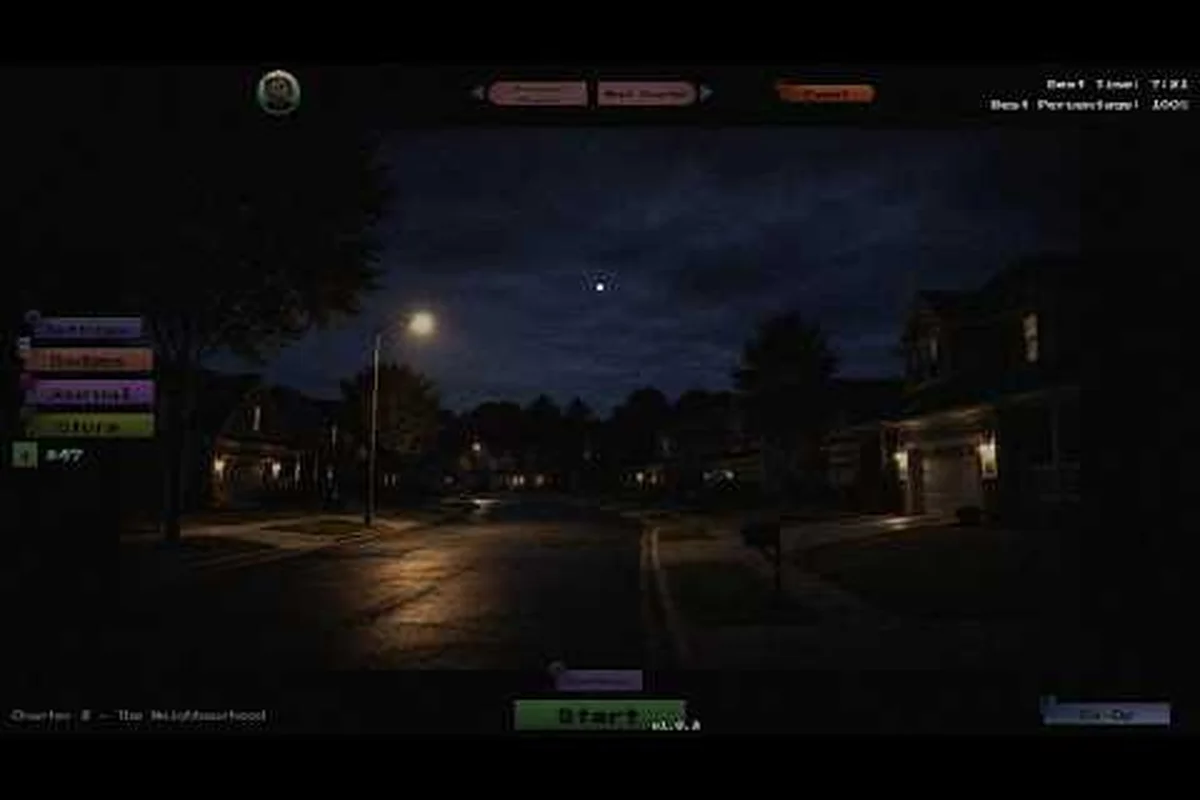
The Mall, added on 2026-09-12, is the most recent chapter and the one the community is still learning. Its costumed figure anomalies and mannequin swaps are visually dense, and the escalator feed has the highest decoy-to-real-anomaly ratio in the game. Nightmare crews running The Mall report the longest average attempt count, and the anomaly detected all anomalies catalog still reflects mid-September community data, so the full list may expand. If you are reading this before the catalog stabilizes, treat The Mall as a learn-by-doing chapter and budget at least three full attempts before you expect a clear.
Common Nightmare Pitfalls and How to Dodge Them
Even experienced Veteran crews fall into the same handful of traps on nightmare mode, and what is striking is how narrow the failure surface actually is: the same six or seven pitfalls account for the vast majority of shift wipes tracked in the per-chapter Journal's postmortem notes. Most of them are coordination issues — feed assignment drift, floater neglect, baseline-versus-decoy confusion — not raw skill issues, which is the one piece of good news. That gap between mechanical ability and shared information flow is exactly why split-camera duty and a fixed report budget matter more than reaction time once the difficulty dial is cranked to nightmare.
-
Over-reporting in the first minute. Fresh crews tend to flag every minor change in the opening seconds of the shift. Most of these are decoys. Hold the first 60 seconds of the shift to establish baseline, then start reporting.
-
Ignoring the audio cue layer. Figure anomalies almost always come with an audio tell. If a watcher is not wearing headphones or has voice chat drowning the in-game audio, they will miss the cue and the figure anomaly slips past.
-
Letting the floater drift. The floater is the most important role in a 3–4 player crew, but it is also the easiest to neglect because the floater is not "owning" a feed. Assign the floater a primary feed plus a secondary sweep target, and rotate the floater role every two shifts so nobody burns out.
-
Forgetting to reset between shifts. The per-chapter Journal tracks your anomaly catalog across shifts, but it does not auto-reset between attempts. If you cleared The Hospital on shift four and then wipe on shift five, your Journal still shows the cleared status, which can mislead a tired crew into thinking they have more report budget than they actually do.
-
Skipping the report count check. Most nightmare shifts fail because the crew runs out of reports in the last 90 seconds, not because they missed anomalies early. Track your report count in real time and slow down in the final minute.
The pattern across all of these is the same: nightmare mode punishes sloppy information flow, not bad reflexes. A 2-player crew with disciplined split-camera duty will clear more shifts than a 6-player crew that is arguing about feed assignments mid-shift.
Frequently Asked Questions
How many players can join an Anomaly Detected nightmare mode shift?
Anomaly Detected supports up to 8 players in a single shift, and that cap applies to nightmare mode as well. The nightmare sweet spot is 3–4 players because each watcher can own a dedicated feed set with a floater for backup. Crews of 6–8 work but introduce communication overhead that costs more than the extra eyes save.
What is the best anomaly detected veteran strategy for nightmare mode?
The most reliable veteran strategy for nightmare mode is a fixed split-camera duty rotation with a 3–5 minute watch cycle, a floater assigned to the noisiest feed, and a pre-shift huddle that locks feed assignments before the timer starts. Bucket your scans into object, lighting, and figure categories, and report only confirmed anomalies — suspected calls waste the report budget faster than anything else in nightmare.
Do I need the Veteran badge to attempt nightmare mode?
The Veteran badge is not a hard gate, but it functions as a quality-of-life filter. Crews without the badge consistently run out of reports before the shift ends, especially on The Hospital and The Mall. The cleanest path into nightmare mode is to clear the Veteran contract on each chapter first, then bring the same 3–4 player crew into nightmare with the rotation locked in.
What is the difference between Veteran Mode and nightmare mode in Anomaly Detected?
Veteran Mode is the highest named difficulty in the base game and gates a per-chapter badge. Nightmare mode is an overlay that raises anomaly density, tightens the report budget, extends shift length, and pulls harder on the decoy pool. The two stack: you run the Veteran contract under nightmare constraints, not a separate pool of mechanics.
How do I set up co-op with friends for nightmare shifts?
Create or join a private server through the Anomaly Detected game page, invite up to 7 friends, and use a Discord call for the duration of the shift. In-game voice chat works for pre-shift planning but gets drowned out by the audio cues during the watch cycle. Lock feed assignments in the pre-shift huddle and resist the urge to rotate every cycle — a 3–5 minute cycle is the nightmare-mode community standard.