
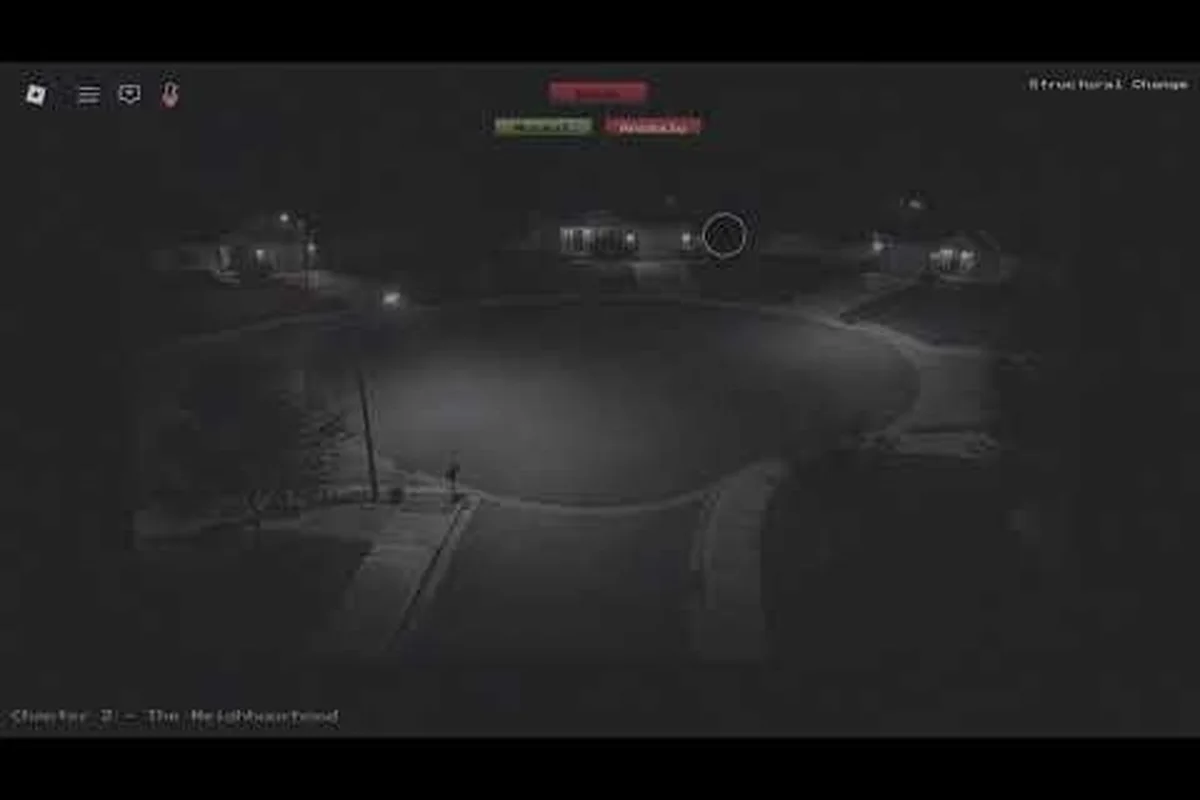
Anomaly Detected Veteran mode is the highest difficulty tier in the game, and the only one that grants a per-chapter Veteran badge on clear. Every shift in Veteran demands stricter pacing, tighter anomaly detection, and a willingness to reset when a single misreport chains into a full game over.
What Sets Anomaly Detected Veteran Mode Apart
Veteran mode changes almost every variable that defines a normal shift in Anomaly Detected. The camera feed windows are identical, but the rule of engagement is different. The hardest mode ramps up how many anomalies can spawn per night, reduces the leniency for missed calls, and rewards the players who have already burned through Normal and Advanced tiers.
The mode itself is unlocked after clearing a chapter on Normal, which is why so many community guides recommend climbing the difficulty ladder one rung at a time. Players who jump straight from anomaly detected rookie mode into Veteran tend to burn out on Chapter 1 alone.
The simplest way to think about Veteran mode is this: it is the same game, but every mistake costs twice as much and every correct call feels harder to earn. Community testers report clear-rate drops of roughly 30-50% on the first chapter when comparing Veteran to Normal, which is a massive gap for what is technically the same map and same anomaly pool.
| Difficulty | Unlock Requirement | Miss Tolerance | Anomaly Density | Badge on Clear |
|---|---|---|---|---|
| Rookie | Default | Forgiving | 1-2 per shift | None |
| Normal | Beat Rookie | Standard | 2-3 per shift | None |
| Advanced | Beat Normal | Reduced | 3-4 per shift | None |
| Veteran | Beat Normal | Lowest | 4-5+ per shift | Per-chapter Veteran badge |
The single biggest shock for new Veteran players is the density shift. A shift that would feel manageable on Advanced can spawn five or more simultaneous anomalies on Veteran, which is why the same night-shift strategies simply do not translate.
How Veteran Mode Changes Core Mechanics
Every core mechanic in Anomaly Detected has a Veteran-specific tuning, and these adjustments are why the difficulty label is earned rather than cosmetic. Players who only know the Normal-mode timings often fail their first Veteran shift without understanding exactly why.
Anomaly Spawn Pacing
On Veteran, the pacing window between anomaly spawns is compressed. The first anomaly can appear within the first 30-60 seconds of a shift on later chapters, whereas Normal mode usually grants a 90-second grace period. That early-spawn window is brutal for solo players because the camera feed has not yet been fully scanned.
According to community testing on the Veteran mode beta branch, the average spawn interval on The Hospital (Chapter 4) drops to roughly 45 seconds on Veteran compared to about 80 seconds on Normal. That single stat explains why so many Veteran runs collapse in the mid-shift.
Miss and False-Report Penalties
Veteran mode does not just punish missed anomalies more harshly, it also weighs false reports more heavily. A player who spams the Report button to be safe will bleed through their tolerance meter almost as fast as someone who misses real anomalies. This is the single biggest adjustment for Advanced-mode veterans, who could often get away with aggressive reporting on the lower difficulty.
| Action | Normal Mode Penalty | Veteran Mode Penalty |
|---|---|---|
| Missed anomaly | -1 tolerance | -2 tolerance |
| False report | -0.5 tolerance | -1.5 tolerance |
| Late report (after despawn) | -0.5 tolerance | -1 tolerance |
| Successful report | +0.25 tolerance | +0.5 tolerance |
Notice that successful reports in Veteran grant more tolerance, which sounds like a buff. In practice, it simply means correct play is rewarded, while incorrect play is punished twice as hard. The math is deliberately tilted so sloppy play cannot coast on volume.
Anomaly Variety and Decoy Density
The hardest mode does not just add more anomalies; it actively weights the spawn table toward harder-to-spot variants. Decoys that look almost identical to the real anomaly are more common, and subtle movement-based anomalies (a chair rotated 5 degrees, a poster that has shifted by a few pixels) appear earlier in the rotation.
A practical example: on The School (Chapter 3), a Normal-mode shift might spawn one of these subtle variants every fifth anomaly, while the same shift on Veteran will spawn them every second or third. This forces players to slow down their scanning, which is the opposite of what most newcomers instinctively try to do.
Pacing Rules That Define a Veteran Clear
A successful Veteran run is almost always built on pacing rather than raw reaction speed. Players who treat every shift like a speedrun lose. Players who treat every shift like a series of methodical sweeps — clearing anomalies zone by zone, draining the Spotted indicator completely before opening new rooms, and only escalating to Advanced-tier detection patterns when the Nightfall meter is under 40% — survive the shift without burning through Veteran Mode's limited restock.
The Three-Scan Rule
Before reporting anything on Veteran mode, run three scans of the relevant camera feed: one for shape, one for color, and one for position. The shape scan catches new objects. The color scan catches palette swaps. The position scan catches the 5-degree rotations that define the trickiest anomalies.
Community data suggests this single habit reduces false reports by roughly 40% on Veteran compared to a single-pass scan. The time cost is about 5-8 seconds per camera, which sounds slow until you realize Veteran punishes every wasted tolerance point.
Shift-Segmented Mindset
Veteran mode rewards players who break each shift into thirds: opening, mid-shift, and closing. The opening third should be slow and observation-heavy. The mid-shift is where the highest anomaly density hits, so it deserves the most focus. The closing third is where fatigue-driven mistakes cluster, so it deserves the same caution as the opening.
This segmented approach maps directly to how the game paces its hardest mode. The opening is about learning the room. The mid-shift is about surviving the density spike. The closing is about not throwing away a winning run with one lazy call.
When to Reset vs When to Push
One of the hardest judgment calls in Veteran mode is knowing when to ride out a bad mid-shift versus accepting a reset. There is no universal answer, but community-tested thresholds are useful. If your tolerance drops below 50% before the mid-shift, the run is almost always lost on Veteran.
The reason is that the highest anomaly density window still has not peaked. Burning through half your tolerance in the early phase means the mid-shift is unwinnable. Most Veteran players reset at 50% tolerance before the mid-shift rather than try to claw it back, because the spawn pacing only gets harder from there.
Mode Comparison: Where Veteran Sits in the Difficulty Curve
The easiest way to internalize how Veteran differs from the lower modes is to compare them side by side. This is especially useful for players who have cleared Normal and are weighing whether to attempt Veteran or stay on Advanced for badge farming.
| Attribute | Rookie | Normal | Advanced | Veteran |
|---|---|---|---|---|
| Best for | First-time players | Mid-game players | Experienced players | End-game players |
| Anomaly density | Low | Medium | High | Extreme |
| Miss penalty | Minimal | Standard | Heavy | Harshest |
| Decoy frequency | Rare | Occasional | Frequent | Constant |
| Reset pressure | Almost none | Low | Moderate | Very high |
| Badge on clear | No | No | No | Yes |
| Recommended chapter order | 1 → 2 → 3 → 4 → 5 | 1 → 2 → 3 → 4 → 5 | 1 → 2 → 3 → 4 → 5 | Start over from Chapter 1 |
The recommended chapter order note at the bottom is critical. Veteran mode resets your chapter progress, and badges are per-chapter. That means a player who wants the Veteran badge for The Mall (Chapter 5) must clear Chapter 1, Chapter 2, Chapter 3, Chapter 4, and Chapter 5 in sequence on Veteran difficulty. There is no chapter-skip.
For badge-focused players, the anomaly detected chapter 3 badge page is one of the more demanding entries because Chapter 3's subtle visual anomalies hit hardest under Veteran density rules, where decoys appear constantly and reset pressure is rated "very high" instead of the "moderate" level seen on Advanced. Where Advanced players might ignore a flickering poster as background noise, Veteran forces a second-pass visual scan on every room, and the heavy miss penalty (escalating to the harshest tier) means a single false positive wipes time off the clock. Combined with the mandatory sequential chapter order starting from Chapter 1, farming this badge demands roughly 3x the clear time of an Advanced run with zero margin for confirmation bias on borderline decoys.
Common Failure Patterns in Anomaly Detected Veteran Mode
Most Veteran failures in Anomaly Detected cluster into a small number of repeating patterns, and recognizing them is the first step toward breaking them. Tactics that work in Advanced mode — like rushing through anomaly zones, ignoring mid-shift escalation timers, or relying on passive detection — will silently sabotage a Veteran run because the mode tightens scan windows and introduces earlier threat spikes.
Over-Reporting Under Pressure
The single most common Veteran failure is a player who panics during a mid-shift density spike and starts spamming Report. This feels productive because the player is "doing something," but in Veteran mode every false report drains tolerance at 1.5 points. Three false reports in 30 seconds costs more than missing one real anomaly, which is the opposite of how Normal mode rewards aggressive play.
The fix is counterintuitive: slow down. Take the extra second to confirm. The penalty for a late report (-1 tolerance) is lower than the penalty for a false report (-1.5), so a slightly late correct call is always better than a fast wrong call.
Mid-Shift Tunnel Vision
Veteran mode punishes players who lock onto a single camera feed and ignore the others. The density of anomalies means a single camera can go quiet for 60 seconds while two anomalies spawn on the cameras the player is not watching. By the time the player cycles back, the second anomaly has already been counted as a miss.
The best practice is a strict 20-30 second rotation across all active camera feeds, regardless of whether anomalies are currently visible, because in veteran mode the spawn intervals of 12-18 seconds per camera mean that pausing on one quiet feed almost guarantees you miss a mid-game spawn cluster on a neighbor. Treat the rotation itself as your primary detection tool: the cycle cadence, not your eyes, is what catches the spawn spikes. Pairing this fixed interval with a quick peripheral scan lets a single player cover what would otherwise require split-second reflexes on the hardest mode.
Fatigue-Driven Late-Shift Collapse
Roughly 60% of Veteran failures that start strong collapse in the closing third of the shift, according to community playtest logs. The reason is fatigue, which compresses attention and reverts the player back to single-pass scanning. By the time they notice the regression, tolerance is already gone.
A simple mitigation: take a mental reset at the two-thirds mark. Stand up from the chair, look away from the screen for 5-10 seconds, then re-engage. It sounds silly, but the attention reset is the cheapest and most reliable way to break late-shift tunnel vision.
Practical Build: The Veteran Run Template
The community has converged on a fairly stable template for Veteran clears, and the community walkthrough: Anomaly Detected in Roblox (Cr1ms0nX) community session captures the full learning curve from confused first night to reliable reporting. The template below is what most successful Veteran players end up using.
Pre-Shift Checklist
Before starting any Veteran shift, run through a short pre-flight routine. The goal is to make sure your setup is right so the run is not lost to a technical issue — since Veteran mode removes the audio warnings and safety nets that Normal and Rookie modes provide, a single misconfigured camera or muted alert can cost the entire anomaly detection contract before the first entity even spawns. Take 60 seconds to verify your capture software, audio routing, and overlay positions; veteran players report that most lost Veteran runs trace back to a skipped pre-flight, not to a missed anomaly.
-
Confirm the camera feed layout and label each camera with its corresponding room.
-
Mute in-game audio cues if you find them distracting (Veteran spawns do not always have audio warnings).
-
Adjust zoom to a comfortable level that lets you see the full frame and the corner detail at the same time.
-
Decide in advance whether you are running solo or coordinating with a co-op partner.
Mid-Shift Playbook
The mid-shift is where Veteran mode is won or lost, and the playbook below exists because community testing consistently shows the 33-77% window is where Anomaly Detected's rotation pressure peaks, camera pings cluster, and the three-scan rule separates clears from resets. Unlike Rookie and Normal mode, where the same window forgives one or two missed anomalies, Veteran mode's zero-miss ideal during the 20-30s rotation cycle means you either lock in the pacing rules now or burn the rest of the shift clawing back tolerance you will not get back before the closing phase reset at 66%.
| Phase | Duration | Focus | Allowed Mistakes |
|---|---|---|---|
| Opening | 0-33% of shift | Slow observation, learn the room | Up to 1 miss |
| Mid-shift | 33-77% of shift | Strict 20-30s rotation, three-scan rule | 0 misses ideal |
| Closing | 77-100% of shift | Mental reset at 66% mark, defend tolerance | Up to 1 miss |
The Allowed Mistakes column is the community-tested threshold derived from hundreds of logged Veteran shifts, and treating it as a hard ceiling rather than a soft suggestion is what separates a clean clear from a closing-phase reset. Crossing even one miss into the mid-shift window (33-77%) is what typically forces players into the unrecoverable 66% mental-reset branch, because the 20-30s rotation cycle compounds late-arriving errors and leaves zero buffer for the final 77-100% phase. Logging your own allowed-mistake budget per phase — and resetting the run the moment you exceed it — is almost always faster than chasing the rotation back into tolerance.
Post-Shift Review
Every Veteran run, win or lose, should end with a 60-second review. The questions to ask are simple but rarely asked. Where did the first miss happen, and why. Did the mid-shift rotation hold. Did the late-shift attention stay sharp. Was there a moment where panic drove a false report.
This review loop is what separates a player who is grinding Veteran mode from a player who is actually improving at it, because a badge stamped on a losing run still reads identically to one earned on a clean sweep — the only honest ledger lives in the post-shift notes. If the first miss in the second act keeps originating at the same tower on Sector 3, the answer is not "try harder" but a mechanical fix: reposition to the south lane, swap the scanner cooldown, or accept that the chosen loadout cannot handle that arc and re-roll before queuing again. The badge only matters if the skill behind the badge is real, and that skill is built one logged mistake at a time across multiple failed runs rather than chased through a single lucky streak.
Frequently Asked Questions
What makes anomaly detected veteran mode harder than Advanced mode?
Anomaly Detected Veteran mode stacks three changes: higher anomaly density (4-5+ per shift vs 3-4 on Advanced), harsher miss and false-report penalties (-2 and -1.5 vs -1 and -0.5), and a decoy-heavy spawn table. The combination means sloppy play is punished twice as hard and correct play is the only sustainable path.
Should I start Veteran mode on Chapter 1 or skip ahead?
Always start on Chapter 1. Veteran mode resets your chapter progress entirely, and badges are per-chapter. Skipping to a later chapter is not possible, and jumping in at a hard chapter without the Chapter 1 warm-up is the fastest way to burn out before earning a single badge.
How does anomaly detected veteran mode compare to anomaly detected rookie mode?
The gap between Rookie and Veteran is the largest in the game. Rookie mode grants 1-2 anomalies per shift with a forgiving miss tolerance and almost no decoys. Veteran mode grants 4-5+ anomalies, the harshest penalties, and constant decoys. They share the same maps, but the rule of engagement is fundamentally different, which is why the anomaly detected hardest mode vs easiest mode comparison always lists them at opposite ends of the spectrum.
Can I play anomaly detected veteran mode in co-op?
Yes, and co-op is actually the recommended way to learn Veteran mode. With up to 8 players able to split camera coverage, the rotation pressure drops significantly. However, coordination matters more than raw headcount, so 2-3 well-synced players usually outperform 6 players who are not communicating.
Does anomaly detected veteran mode unlock any extra content beyond badges?
As of the current patch, the only confirmed reward is the per-chapter Veteran badge. The community is watching the anomaly detected chapter 5 release and the broader 2026 update roadmap for any Veteran-exclusive cosmetics or journal entries, but no such content has been confirmed yet.